Bridging the gap: Implementing 360° virtual tours in research facilities
–
A pilot study
Dimitra Mitsa1, Sri Ranjani Ganji1, Joanna Brown1, Bradley Plows1 and Gemma Wildsmith1
1 University of Leeds, Leeds, UK
Abstract
This paper reports on a pilot study exploring the use of immersive 360-degree videos within higher education biological science research facilities. Despite their potential to enhance teaching and learning, the adoption of such technologies has been limited, with most existing studies focusing on undergraduate teaching laboratories thereby confining their use to introductory science education. Expanding their application to specialised equipment in advanced laboratories, such as university research facilities, offers opportunities to improve student career readiness and extend the pedagogical value of research infrastructure. To address this gap, a pilot 360-degree virtual tour of the Biomolecular Mass Spectrometry Facility at the University of Leeds was developed using the ThingLink learning platform. The pilot aimed to explore the challenges of creating such a resource and to collect student feedback through surveys and focus group discussions. This paper discusses the development process, key lessons learned, and insights gained from student responses, which will inform the refinement of the virtual resource to better support student learning and foster the development of work-ready graduates.
Keywords
immersive learning, extended reality (XR), virtual
360-degree tour, higher education, digital pedagogy
Introduction
Immersive learning has significantly transformed higher education by providing students with captivating and interactive educational experiences (MacDowell & Lock, 2022). However, the term “immersive learning” is not currently very well defined and lacks consistency (Dengel, 2022; Nilsson et al., 2016). Nevertheless, at present, the term is used to describe pedagogy that can include elements of “extended” reality (XR) such as virtual reality (VR), augmented reality (AR), mixed reality (MR), or simulated environments (Rauschnabel et al., 2022). XR technologies have been widely adopted in various disciplines including medicine and nursing, construction, urban planning, heritage education, firefighting, aviation, and hazardous material handling to provide safe, immersive training environments that replicate dangerous scenarios without exposing learners to real-world risks (Dodoo et al., 2025; Emery & Champion, 2025; Fugate et al., 2025; Hajrasouliha, 2024). Virtual 360-degree tours also fall within the scope of XR technologies, as they blend digital and physical elements to create engaging virtual environments. However, compared to other XR technologies, there has been very limited usage of virtual tours for educational purposes, and when used, they have been primarily focused on disciplines related to medicine and healthcare (Pirker & Dengel, 2021; Rosendahl & Wagner, 2024).
Immersive 360-degree videos use omnidirectional cameras to capture scenes of a real-world environment which are later stitched together to provide a 360-degree perspective. There are various types of 360-degree videos, which can be broadly classified based on their display type (monoscopic or stereoscopic), creation method (realistic, animated, combined) and interactivity (non-interactive or interactive with various degrees of freedom) (Pushkar et al., 2024). Users can experience a sense of immersion which is not possible with a 2D video, enhancing student motivational potential (Rosendahl & Wagner 2024). They also provide a cost-effective and easier to develop option compared to other XR technologies. The videos can be viewed using a computer screen or via a VR or other Head Mounted Display (HMD) headset. The use of immersive 360-degree videos as pedagogical tool is expected to increase as they have already shown to improve engagement and learning and provide experiences in a safe setting of otherwise difficult to access environments or of situations that could potentially pose a health and safety risk to students (Blair et al., 2021; Snelson & Hsu, 2020).
The use of immersive 360-degree videos as a pedagogical tool in higher education for the biological and chemical sciences has been very limited. Some examples include using them to familiarise students with lab equipment and build their confidence prior to lab classes (Ardisara & Fung 2018; Clemons et al., 2019; Garrido et al., 2024; Levonis et al., 2020; Vola et al., 2023), as a complementary educational resource when in person laboratory access is not possible (Tauber et al., 2022) or as a tool to deliver laboratory safety training (Girmay et al., 2024). However, the majority of studies involve undergraduate teaching laboratories which limit the use of the 360-degree video technology to introductory science. One exception to this trend is a proposal involving engineering laboratories (Hernández-Rodríguez & Guillén-Yparrea, 2023) suggesting the use of 360-degree virtual tours in providing remote access to specialised equipment. While that study focused on engineering contexts, it underscored the value of virtual tours in enhancing accessibility and engagement with state-of-the-art instrumentation supporting Industry 4.0 competencies. We argue that there is a need to expand the application of this pedagogical tool to enable remote access to labs housing special laboratory equipment, thus providing complementary teaching that goes beyond basic concepts and prepares students for future careers in laboratory science.
There is a significant gap in graduates’ knowledge and skills, leading employers to increasingly adopt a skills-based approach to recruitment, with less emphasis on traditional qualifications. A 2024 survey conducted by the Institute of Student Employers, revealed that 10% of employers surveyed have fully adopted this approach, 58% have partially adopted it, and another 29% are considering it. (Institute of Student Employers, 2024). Thus, it is not surprising that preparing work-ready graduates has become one of the top priorities of HE policy in recent years (Higher Education Policy Institute, 2023). XR technology, including 360-degree virtual tours, can aid significantly in this respect, enabling students to experience state-of-the-art instrumentation that they would not otherwise have access to during their studies. These virtual tours can provide immersive and interactive experiences, allowing students to familiarise themselves with advanced equipment and laboratory environments remotely. This exposure will not only enhance their practical skills but also bridge the gap between academic learning and real-world applications.
By integrating 360-degree virtual tours into the curriculum, educational institutions can offer a more comprehensive and engaging learning experience. Students can explore complex laboratory setups, understand the operation of sophisticated instruments, and gain insights into advanced scientific methods. In our view, this approach ensures that graduates are better prepared for the demands of modern scientific and engineering careers, equipped with the knowledge and skills necessary to excel in their chosen fields. Consequently, we argue that the use of XR technology in education supports the goal of producing highly competent and work-ready graduates.
Research laboratories in universities are often underutilised for teaching purposes, as they are typically accessible only to postgraduate students, postdoctoral researchers, and faculty staff. This limited access means that undergraduate students miss out on valuable opportunities to engage with advanced scientific equipment and methodologies. By restricting access to these labs, universities inadvertently create a gap between theoretical knowledge and practical application, which can hinder the development of essential skills needed for future careers. Integrating 360-degree virtual tours and other XR technologies into the curriculum can help bridge this gap, providing undergraduates with remote access to state-of-the-art instrumentation and fostering a more comprehensive and immersive learning experience (Burke et al., 2025; Kuleto et al., 2021). This approach not only maximises the use of existing resources but also aligns with the goal of producing work-ready graduates who are well-prepared for the demands of the modern workforce (Khan et al., 2022; Pandya et al., 2023).
With this in mind, we developed a pilot 360-degree virtual tour with embedded educational elements (hereafter named virtual resource) of the Biomolecular Mass Spectrometry Facility of the Faculty of Biological Sciences at the University of Leeds using the learning platform ThingLink. The facility currently houses various mass spectrometry and associated chromatography systems, capable of applications for both large and small molecule analysis. In biological sciences, students are expected to develop practical skills in advanced analytical techniques such as mass spectrometry and chromatography, which underpin research in proteomics, metabolomics, and structural biology. However, access to these instruments is often restricted to postgraduate researchers, leaving undergraduates with limited exposure to real-world applications. Our goal is to provide students with an immersive experience of these technologies, enabling them to understand their scientific purpose, operational principles, and industrial relevance. The aims of the pilot were multifaceted, focusing on understanding the challenges associated with the creation of the virtual resource, effectively utilising the learning platform ThingLink, and identifying any limitations encountered during the process. Pilot studies in research can assess feasibility, gather preliminary feedback, and inform iterative improvements before wider implementation (Malmqvist et al., 2019; van Teijlingen & Hundley, 2001). Additionally, the pilot sought to capture student feedback from an initially limited sample of students. This feedback was crucial for informing further future improvements of the virtual resource prior to its final development and launch across various programmes and modules within the faculty. By addressing these aims, the pilot aimed to ensure that the virtual resource would be both effective and engaging for students, ultimately enhancing their learning experience. This paper describes the creation of the pilot, the lessons learned throughout the development process, and the feedback obtained from students. The insights gained from this pilot study will guide the refinement of the virtual resource, ensuring it meets the educational needs of students and aligns with the faculty's goal of producing work-ready graduates. The purpose of this paper is to describe the development and implementation of a 360-degree virtual tour in a research facility as an applied pedagogical innovation, and to present preliminary findings from a pilot study that informed iterative improvements. The study’s intent is not to provide generalisable research conclusions but to share lessons learned and recommendations for future development.
Methodology
Development of the virtual resource
The 360-degree virtual experience of the mass spectrometry facility consisted of a 360-degree virtual tour (monoscopic, realistic and interactive) which was created by taking a series of photos of the mass spectrometry research facility using a 360 camera (Insta 360 One X2) at twelve pre-planned locations. For each location, the best quality 360 image was chosen, stitched and exported from the camera into Jpeg format using the Insta 360 Studio application. The images were subsequently uploaded to a project folder in ThingLink (https://www.thinglink.com), using a purchased license which allows access to the platform for university staff and students. A floor plan was then created with twelve markers for the locations in the lab where the 360 images were captured. The 360 images were subsequently linked to these markers forming a 360 virtual laboratory to which digital resources were subsequently added as links or embedded content.
ThingLink tags were strategically used on various instrumentation and peripherals to facilitate identification. Simple tags, which did not include added links or embedded content, were employed to describe the basic components of each instrument. These tags provided essential information such as the name of the component and a brief description of its function. Tags of a different colour and design were used to draw students' attention to more detailed educational content. These enhanced tags contained embedded MS Sways, which offered comprehensive overviews on several key topics. Sway is a Microsoft Office application that can be used to create and share interactive content online. It allows integration of a variety of content, such as plain text, multimedia files, videos and hyperlinks creating a cohesive and engaging narrative. The embedded content contained text, videos and images. The MS Sways had the same layout for all instruments to help students assimilate information more efficiently. In addition, separate tags and labels with text and media were added at the entrance of the facility to familiarise students with the facility and provide necessary induction information and instructions on health and safety.
Collection of student feedback and data analysis
Feedback was collected using a survey that was disseminated to both undergraduate and postgraduate students across the Faculty of Biological Sciences. Eleven students (nine undergraduates and two postgraduate taught students) responded to the call for participation which involved a two-stage process. In the first stage, student participants completed a short survey questionnaire prior to taking part in the focus group sessions which were split in two sessions (session 1: six students, session 2: five students) to allow for more effective dialogue between participants. The questionnaire consisted of a mix of closed and open-ended questions to gather quantitative and qualitative data. The closed-ended questions used a Likert scale format and collected feedback related to technical aspects of the resource, such as ease of navigation, as well as to the suitability and informativeness of the content. The open-ended questions invited reflection on specific aspects of the virtual experience, such as its most useful features, any unclear or confusing elements, and suggestions for improvement. Following the completion of the survey, students were divided into two focus group sessions to facilitate a more in-depth discussion of their experiences. These sessions provided an opportunity for participants to elaborate on their responses and engage in meaningful dialogue about the virtual resource. The use of a mixed-methods approach, combining qualitative and quantitative data via surveys and focus groups, aligns with Creswell & Creswell’s (2018) observation that mixed methods research provides deeper insights than a single-method approach by combining the strengths of both qualitative and quantitative approaches. Focus groups, as Morgan (1997) suggests, allow for deeper exploration of participant experiences, which was essential in understanding nuanced student perceptions of the virtual resource. Closed-ended survey questions were analysed descriptively using frequency counts and percentages to summarise trends. Open-ended survey responses were coded and grouped into categories to identify common suggestions and perceptions. Focus group discussions were transcribed and analysed using thematic analysis using Braun and Clarke’s six-phase framework (Braun & Clarke, 2006). This approach allowed identification of recurring patterns and nuanced insights into students’ perceptions of the virtual resource.
Results and discussion
We found the digital learning platform ThingLink easy to use and very customisable, something that agreed with previous studies involving laboratory equipment (Jeffery et al., 2022). ThingLink contains a number of customisation tools allowing the user to easily add and adjust the interactive elements. Another important feature is the integration of maps and floor plans. ThingLink allows creators to add mini maps or floor plans to their virtual tours, which help users navigate the space more easily. These maps show the user's current location within the tour and provide clickable areas that transport them to different scenes (hotspots) (Figure 1). Our floorplan contained twelve hotspots marking areas that would be of greater interest to students. The floorplan is easily accessible to the user at the top right corner of the screen which allows automatic transportation to another location in the lab without the need to follow a linear path.
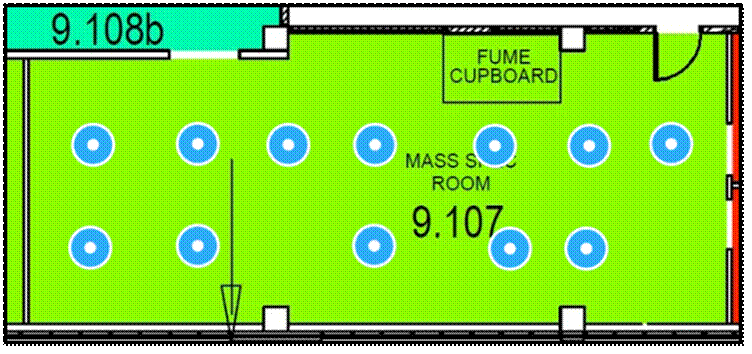
Figure 1. Virtual map of the Biomolecular Mass Spectrometry Facility containing 12 hotspots.
Our design approach was informed by UX (User Experience) best practices (Gopal, 2024; Masveta & Manyangara, 2025; Minichiello et al., 2018). We used “simple” tags which provided brief descriptions for the identification of particular instruments and apparatuses, alongside “enhanced” tags which contained added links and embedded content (Figure 2). We took great care not to create an overly busy visual experience that could cause distractions and negatively impact the learning experience. Using the same headlines/categories and layout for each MS Sway enabled a standardised learning experience, making it easier for students to navigate and understand the information and draw comparisons and contrasts among instruments. By linking each instrument to these common categories, students could seamlessly connect their learning across different pieces of equipment. The MS Sways included:
a) Introduction to the applications: This section provided an overview of the various applications associated with the instrument, helping students understand its practical uses in different scientific contexts.
b) Instrument Information: Key features and hardware information were detailed here, giving students insights into the technical specifications and capabilities of the equipment.
c) Peripherals: Information on related systems, such as Liquid Chromatography, was included to give a broader understanding of the instrument's integration with other technologies.
d) Maintenance: Guidelines and best practices for maintaining the equipment were provided, ensuring students were aware of the necessary steps to keep the instrument in optimal condition.
e) Standard Operating Procedures (SOPs): Detailed SOPs were included to guide students through the correct usage and handling of the equipment.
f) Industrial applications: This section highlighted how the instrument is used in various industries, showcasing its relevance and importance in real-world scenarios.
g) Publications: Relevant research publications from work conducted in the research facility were listed to provide students with additional reading material and examples and showcasing the facility's work and expertise.
h) Software: Information on the software associated with the instrument was provided, including details on its features and how it supports the operation of the equipment.

Figure 2. QExactive UHMR Hybrid Quadrupole Orbitrap mass spectrometry system and associated chromatography equipment and peripherals with added tags.
Navigation and orientation
Student feedback was collected from both undergraduate and postgraduate students, to ensure a diverse range of perspectives. All participants agreed that the tour was very easy or easy to navigate, without encountering technical difficulties. They found the ThingLink software straightforward, even though they were totally unfamiliar with it prior to taking part in this study, and no prior instruction was provided to them.
It took me a second to get my bearings when I was navigating through the space for the first time, but because the technology is quite straightforward, I was able to figure it out without a problem.
The guide map that indicated the part of the space I was entering when I clicked each arrow made it easy for me to understand where I am in the facility without feeling lost.
The map embedded in the software helped them with orientation. This feature was particularly important as disorientation and confusion in a 360-degree immersive video tour has been reported previously (Levonis et al., 2020; Viitaharju et al., 2021).
However, what became evident from the focus group discussions, is that even though students found the software easy to use and identified several key features, they remained unaware of additional software functionalities that would have enriched their experience further (e.g. the accessibility menu). This finding underscored the importance of including a basic navigation guide at the start of the virtual tour that would provide information on the various features of the platform. Such a guide would help maximise users' experience, ensuring they can fully leverage all available tools and options.
Sense of realness
All participants reported feeling a sense of “realness” while navigating the virtual tour:
I felt like I was in the room...
The depth and perspective captured in the virtual experience made it seem like I was entering the lab in person. I really liked how I was able to move my mouse around and get a 360 view of the space and the equipment, and the arrows made it very easy to navigate.
I was quite impressed with the research facility and I really enjoyed being able to experience it remotely from the comfort of my own home. It really felt as if I was entering and walking around in person.
The sense of realness in 360 degree virtual tours has been shown to lead to higher mental imagery processing in terms of quantity, modality and valence compared to other modes of communication like photography (Wu & Lai, 2022), to increase the sense of telepresence due to their embedded interactivity as well as be more effective in augmenting attitudes towards the content compared to videos (Spielmann & Mantonakis, 2018).
Content usefulness
The majority of students found the number of tags to be just right, and all students found the content informative. They identified the most useful feature of the tour to be the “enhanced” tags that contained MS Sways explaining the purpose and applications related to each instrument as well as the work outputs /publications from the facility.
The amount of information on the instruments that were labelled was comprehensive, detailed and useful.
It was very useful to see exactly where everything was in the lab, allowing me to picture the exact workflow one could use, and the instruments involved.
Students felt that the virtual resource enhanced their: a) Understanding of the underlying science b) Awareness of the capabilities of the research facility/ type of research work undertaken at the facility c) Preparedness before using the instruments d) Perception of the quality (state-of-the-art) instrumentation available and e) Accessibility
Useful for people to gauge the layout of the lab and where machines are before using them.
It left a positive impression. With this tool, I would feel less daunted if I visited the facility in person. Also, useful for students who do not have this facility locally.
It demonstrated the range of types of mass spectrometry and their processes and how much equipment was packed efficiently into a space!
It definitely made me understand more of the layout of the facility, its research purpose, and gave me more insight on the inner workings of mass spectrometry as I’ve always only known the theory, but not seen the actual machines.
All participants found the overall experience as a positive one with five of them rating it as excellent. Furthermore, all participants would recommend this virtual resource to other students evidencing a high level of satisfaction, highlighting its perceived usefulness and quality, and indicating that the resource effectively met their expectations and provided a valuable learning experience. The positive feedback obtained from all participants suggests that the resource has the potential to benefit a broader student audience.
In addition, interaction with the software motivated students to try creating their own 360 environments. This newfound interest in digital creation indicates that the virtual experience not only provided valuable content but also sparked curiosity and creativity among the participants and enhanced their digital literacy.
A small proportion of students reported feeling overwhelmed with the amount of information presented in the MS Sway files. The concept of cognitive overload and its effect on student learning is something that has been previously reported in studies that involved immersive technologies in education (Ip et al., 2019; Sari et al., 2024). This is an important pedagogical challenge: immersive resources may increase cognitive load, particularly for learners with limited prior experience in analytical science or digital tools. The feedback obtained could be explained by the diversity observed in our student cohort which consisted of both undergraduate and postgraduate taught students. Differences in age, digital literacy, and disciplinary background may affect the way students navigate XR environments effectively. Focus group discussions of this pilot study provided valuable suggestions to mitigate this challenge, including offering tiered content for different experience levels. For this reason, for future improvements of this resource, we will take into consideration the suggestions proposed by Mayer and Moreno (2023), and in particular the introduction of “segmentation” and “signalling”. Segmenting the content into more manageable pieces of information, aimed at different levels of student expertise (e.g. Novice, Intermediate and Expert) should reduce cognitive overload and provide an easier to use resource. Furthermore, adding signalling elements in the content (e.g. highlights, additional outlines, headlines, side boxes, providing emphasis to key concepts using a colour scheme) will enable students to process the content presented to them more efficiently.
As part of the survey, as well as during the focus group discussions, students were prompted to suggest improvements to the virtual resource. Two main improvements were stated in the survey responses:
a) Name/Identify all instruments/apparatuses visible per hotspot (i.e. do not assume that students are aware/familiar with what would be considered “common” to facility staff/academics/expert users.
b) Provide some information on facility staff. A menu with names and pictures would add a human aspect to the tour and students would know who to contact if they wish to obtain more information.
The discussions that followed at the focus group sessions reinstated all of the above, and provided the following additional insights/suggestions:
c) Provide some more close-ups and an inside view of the instruments (where relevant). E.g. open the column compartment of an HPLC or the autosampler chamber.
d) Names provided in the tags that did not contain the MS Sways did not make much sense to students with minimal or no prior exposure to MS instrumentation. Consider providing a short description next to each tag for additional clarity.
e) Adding more content related to recorded experiments.
f) Instead of adding hyperlinks for videos in the MS Sways, embed the videos instead. This will improve user experience.
g) Add content related to outputs/results. E.g. an image with a spectrum and a short description associated with it.
h) Consider separating the content into “introductory” and “more advanced” for students with no or minimal analytical science experience.
i) Consider adding a recorded voice-over or video at the entrance hotspot explaining how to navigate the virtual tour and highlighting various functionalities of ThingLink.
The additional suggestions expressed during the focus group sessions underscored the value of engaging directly with students, not only to validate the initial survey findings but also to enrich them. These discussions provided a better understanding of student perspectives, allowing participants to elaborate on their survey responses, clarify ambiguities, and introduce new ideas that had not emerged through the survey alone. While surveys can efficiently gather quantitative data and identify general trends, they often lack the depth needed to fully understand students’ perspectives. Focus group discussions, on the other hand, provided a platform for students to elaborate on their responses, share personal experiences, and engage in dialogue. We found that this combination of methods ensures a more comprehensive understanding of the students' views.
Lessons learned and future work
The aim of the development of the 360-degree virtual mass spectrometry research facility tour was to enable students, who do not have the opportunity to do an industrial internship/placement during their studies, to experience state of the art instrumentation and become aware of associated industrial applications in a virtual setting, thus increasing their professional literacy and creating a more inclusive pedagogy. This digital resource utilises the university’s research facilities for teaching purposes, reaching a wider range of student cohorts. The lessons learned, while creating this pilot resource and the feedback we received from students, will enable further optimisation of the resource and eventual integration into the curriculum, and provide a conceptual framework that can be used by other research facilities.
We found ThingLink easy to use and suitable for frequent updates of educational content. Regular updates will be essential in a research facility that houses state of the art analytical instrumentation given the rapid pace of technological advancements. Thus, the learning platform used should be able to accommodate these changes efficiently without the need of specialised technical knowledge from faculty staff.
The focus groups were designed to delve deeper into the nuances of the feedback, allowing for a richer understanding of the students’ perspectives. This qualitative approach complemented the data obtained from the questionnaires, offering a more comprehensive view of the students’ experiences. The insights gained from these discussions were invaluable in identifying common themes, uncovering underlying issues, and generating actionable recommendations for improving the virtual resource.
A significant limitation of this study, however, is that it employed a small sample of participants, and thus, no conclusions can be drawn in terms of similarities or differences in undergraduate or postgraduate perceptions when using the resource. While the feedback provided valuable insights into the overall suitability and effectiveness of the resource, the small number of participants means that any observed differences in how undergraduate versus postgraduate students perceived the resource may not be statistically significant. Consequently, it is difficult to determine whether the resource meets the specific needs and expectations of each group. Further research with a larger and more representative sample would be necessary to accurately assess the suitability of the virtual resource for different academic levels and to identify any distinct preferences or requirements that may exist between undergraduate and postgraduate students.
Future work will involve optimising the resource based on the feedback and recommendations received. The optimisations will be multifaced and will aim to improve navigation and orientation, adding additional informative content but segmenting it to cater to different experience levels without overwhelming the students and provide a human component to the virtual tour.
Conclusion
The positive feedback and high recommendation rate received from student feedback underscore the importance of continuing to develop and refine such virtual tools to enhance educational experiences and support student learning. We believe that the virtual mass spectrometry research facility tour serves as a valuable tool for bridging the gap between theoretical knowledge and practical application. By providing students with a virtual experience of advanced instrumentation, they can better understand the real-world implications of their studies. This immersive approach not only enhances their learning but also prepares them for future careers in analytical science and related fields. While 360-degree virtual tours have been previously explored in science education, their application in advanced research facilities remains underdeveloped. This pilot study gathered early-stage feedback from a small cohort of students to inform iterative improvements. Our goal is to share the lessons learned from this initial phase with the academic community, particularly those involved in educational innovation and digital pedagogy, to foster dialogue and potentially guide similar initiatives. This pilot study contributes to a growing body of work by demonstrating the feasibility and pedagogical value of immersive virtual tours in specialised scientific environments, aligning with national priorities for work-readiness in higher education.
Acknowledgements
We would like to thank Prof Frank Sobott and Dr Anton Calabrese for providing valuable feedback and insightful suggestions during the development of the educational immersive 360-degree virtual resource.
Declarations
Statement of the use of generative AI and AI-Assisted technologies in the writing process
During the preparation of this manuscript, the author(s) used an AI language model (Microsoft Copilot) in order to improve grammar, syntax and clarity. After using this tool/service, the author(s) reviewed and edited the content as needed and take(s) full responsibility for the content of the published article.
Funding and ethical approval
This work was supported by funding obtained from the University of Leeds Experiential Learning Seedcorn Fund (DV.LETE.394329). Ethical approval was obtained from the University of Leeds Faculty of Biological Sciences Research Ethics Committee (Ref: BIOSCI 19-030).
References
Ardisara, A., & Fung, F. M. (2018). Integrating 360° videos in an undergraduate chemistry laboratory course. Journal of Chemical Education, 95(10), 1881–1884. https://doi.org/10.1021/acs.jchemed.8b00143
Blair, C., Walsh, C., & Best, P. (2021). Immersive 360° videos in health and social care education: A scoping review. BMC Medical Education, 21, 590. https://doi.org/10.1186/s12909-021-03013-y
Braun, V., & Clarke, V. (2006). Using thematic analysis in psychology. Qualitative Research in Psychology, 3(2), 77–101. https://doi.org/10.1191/1478088706qp063oa
Burke, D., Crompton, H., & Nickel, C. (2025). The use of extended reality (XR) in higher education: A systematic review. TechTrends, 69, 998-1011. https://doi.org/10.1007/s11528-025-01092-y
Clemons, T. D., Fouché, L., Rummey, C., Lopez, R. E., & Spagnoli, D. (2019). Introducing the first year laboratory to undergraduate chemistry students with an interactive 360° experience. Journal of Chemical Education, 96(7), 1491–1496. https://doi.org/10.1021/acs.jchemed.8b00861
Creswell, J. W., & Creswell, J. D. (2018). Research design: Qualitative, quantitative, and mixed methods approaches. SAGE Publications.
Dengel, A. (2022). What is immersive learning? In Proceedings of the 2022 8th International Conference of the Immersive Learning Research Network (iLRN) (pp. 1-4). IEEE. https://doi.org/10.23919/iLRN55037.2022.9815941
Dodoo, J. E., Al-Samarraie, H., Alzahrani, A. I., & Tang, T. (2025). XR and workers’ safety in high-risk industries: A comprehensive review. Safety Science, 185, 106804. https://doi.org/10.1016/j.ssci.2025.106804
Emery, S., & Champion, E. M. (2025). Cultural play at a distance: Post-COVID serious heritage games. Heritage, 8(7), 262. https://doi.org/10.3390/heritage8070262
Fugate, J. M. B., Tonsager, M. J., & Macrine, S. L. (2025). Immersive extended reality (I-XR) in medical and nursing for skill competency and knowledge acquisition: A systematic review and implications for pedagogical practices. Behavioral Sciences, 15(4), 468. https://doi.org/10.3390/bs15040468
Garrido, A., Berthaut, F., & Manganoni, J. (2024). Evaluation of the use of a 360° immersive visit of the organic chemistry practical laboratory for pharmacy students. Journal of Chemical Education, 101(10), 4182-4188. https://doi.org/10.1021/acs.jchemed.4c00264
Girmay, S., Yliniemi, K., Nieminen, M., Linnera, J., & Karttunen, A.J. (2024). Enhancing 360° virtual laboratory safety training with linear learning pathway design: Insights from student experiences. Education for Chemical Engineers, 47, 12-21. https://doi.org/10.1016/j.ece.2024.02.002
Gopal, P. (2024). Designing classroom learning experiences for optimal pedagogical-technological integration: Unifying Universal Design for Learning and User Interface/User Experience principles. Indian Journal of Educational Technology, 6(II), 426–438. https://journals.ncert.gov.in/IJET/article/view/517
Hajrasouliha, A. H. (2024). Applications, approaches, and ethics of the extended reality in urban design and planning. Journal of the American Planning Association, 90(3), 551–567. https://doi.org/10.1080/01944363.2023.2275123
Hernández-Rodríguez, F., & Guillén-Yparrea, N. (2023). 360° tour as an interactive tool for virtual laboratories: A proposal. In C. S. González-González et al. (Eds.), Learning technologies and systems: ICWL SETE 2022 (Lecture Notes in Computer Science, Vol. 13869, pp. 265–269). Springer. https://doi.org/10.1007/978-3-031-33023-0_23
Higher Education Policy Institute. (2023, March 13). Graduate employability takes top spot in the battle of the metrics- so it is time we understood it better. HEPI blog. https://www.hepi.ac.uk/2023/03/13/graduate-employability-takes-its-place-in-the-top-set-of-the-metrics-battle-so-we-need-to-get-to-know-how-it-works/
Institute of Student Employers. (2024). From early career to emerging talent: An ISE report into the case for a skills-based approach to student recruitment and development. https://ise.org.uk/knowledge/resources/386/from_early_career_to_emerging_talent/download
Ip, H. H. S., Li, C., Leoni, S., Chen, Y., Ma, K. F., Wong, C. H. T., & Li, Q. (2019). Design and evaluate immersive learning experience for massive open online courses (MOOCs). IEEE Transactions on Learning Technologies, 12(4), 503-515. https://doi.org/10.1109/TLT.2018.2878700
Jeffery, A. J., Rogers, S. L., Pringle, J. K., Zholobenco, V. L., Jeffery, K. L. A., Wisniewski, K. D., Haxton, K. J., & Emley, D. W. (2022). ThingLink and the laboratory: Interactive simulations of analytical instrumentation for HE science curricula. Journal of Chemical Education, 99(6), 2277-2290. https://doi.org/10.1021/acs.jchemed.1c01067
Khan, N., Sarwar, A., Chen, T. B., & Khan, S. (2022). Connecting digital literacy in higher education to the 21st century workforce. Knowledge Management & E-Learning, 14(1), 46–61. https://doi.org/10.34105/j.kmel.2022.14.004
Kuleto, V., Ilić, M., Stanescu, M., Ranković, M., Popović Šević, N., Păun, D., & Teodorescu, S. (2021). Extended reality in higher education: A responsible innovation approach for Generation Y and Generation Z. Sustainability, 13(21), 11814. https://doi.org/10.3390/su132111814
Levonis, S. M., Tauber, A. L., & Schweiker, S. S. (2020). 360° virtual laboratory tour with embedded skills videos. Journal of Chemical Education, 98(2), 651-654. https://doi.org/10.1021/acs.jchemed.0c00622
MacDowell, P., & Lock, J. (Eds.). (2022). Immersive education: Designing for learning. Springer. https://doi.org/10.1007/978-3-031-18138-2
Malmqvist, J., Hellberg, K., Möllås, G., Rose, R., & Shevlin, M. (2019). Conducting the pilot study: A neglected part of the research process? Methodological findings supporting the importance of piloting in qualitative research studies. International Journal of Qualitative Methods, 18. https://doi.org/10.1177/1609406919878341
Masveta, D., & Manyangara, M. E. (2025). The UX-UI continuum: Exploring the interplay between user experience and user interface in e-learning platforms. Cogent Education, 12(1), 2536531. https://doi.org/10.1080/2331186X.2025.2536531
Mayer, R.E., & Moreno, R. (2003). Nine ways to reduce cognitive load in multimedia learning. Educational Psychologist, 38(1), 43-52. https://doi.org/10.1207/s15326985ep3801_6
Minichiello, A., Hood, J.R. & Harkness, D.S. (2018). Bringing user experience design to bear on stem education: A narrative literature review. Journal for STEM Education Research 1, 7–33. https://doi.org/10.1007/s41979-018-0005-3
Morgan, D. L. (1997). Focus groups as qualitative research. SAGE Publications. https://doi.org/10.4135/9781412984287
Nilsson, N. C., Nordahl, R., & Serafin, S. (2016). Immersion revisited: A review of existing definitions of immersion and their relation to different theories of presence. Human Technology, 12(2), 108-134. https://doi.org/10.17011/ht/urn.201611174652
Pandya, B., Ruhi, U., & Patterson, L. (2023). Preparing the future workforce for 2030: The role of higher education institutions. Frontiers in Education, 8, 1295249. https://doi.org/10.3389/feduc.2023.1295249
Pirker, J., & Dengel, A. (2021). The potential of 360° virtual reality videos and real VR for education- A literature review. IEEE Computer Graphics and Applications, 41(4), 76-89. https://doi.org/10.1109/MCG.2021.3067999
Pushkar, O. I., Bobarchuk, O. A., Denysenko, S. M., & Halchenko, S. M. (2024). Experience in developing and implementing virtual tours using 360° video technology in the educational environment. CEUR Workshop Proceedings, 3918, 308-318. http://ceur-ws.org/Vol-3918/
Rauschnabel, P. A., Felix, R., Hinsch, C., Shahab, H., & Alt, F. (2022). What is XR? Towards a framework for augmented and virtual reality. Computers in Human Behavior, 133, 107289. https://doi.org/10.1016/j.chb.2022.107289
Rosendahl, P., & Wagner, I. (2024). 360° videos in education – A systematic literature review on application areas and future potentials. Education and Information Technologies, 29, 1319-1355. https://doi.org/10.1007/s10639-022-11549-9
Sari, R. C., Pranesti, A., Solikhatun, I., Nurbaiti, N., & Yuniarti, N. (2024). Cognitive overload in immersive virtual reality in education: More presence but less learnt? Education and Information Technologies, 29, 12887–12909. https://doi.org/10.1007/s10639-023-12379-z
Snelson, C., & Hsu, Y. C. (2020). Educational 360-degree videos in virtual reality: A scoping review of the emerging research. TechTrends, 64, 404-412. https://doi.org/10.1007/s11528-019-00474-3
Spielmann, N., & Mantonakis, A. (2018). In virtuo: How user-driven interactivity in virtual tours leads to attitude change. Journal of Business Research, 88, 255-264. https://doi.org/10.1016/j.jbusres.2018.03.037
Tauber, A.L., Levonis, S.M., & Schweiker, S.S. (2022). Gamified virtual laboratory experience for in-person and distance students. Journal of Chemical Education, 99(3), 1183-1189. https://doi.org/10.1021/acs.jchemed.1c00642
van Teijlingen, E. R., & Hundley, V. (2001). The importance of pilot studies. Social Research Update, (35), 1-4. https://sru.soc.surrey.ac.uk/SRU35.PDF
Vola, E., Stoltz, R., & Schumpert, C.A. (2023). Impacts of virtual reality experiences: Enhanced undergraduate student performance and engagement with use of 360-degree video. bioRxiv. https://doi.org/10.1101/2023.02.16.528835
Viitaharju, P., Yliniemi, K., Nieminen, M., & Karttunen, A. J. (2021). Learning experiences from digital laboratory safety training. Education for Chemical Engineers, 34, 87-93. https://doi.org/10.1016/j.ece.2020.11.009
Wu, X., & Lai, I. K. W. (2022). How A 360° virtual tour is more effective than photographs on communication effects: The roles of mental imagery processing and a sense of presence. Current Issues in Tourism, 26(23), 3813–3830. https://doi.org/10.1080/13683500.2022.2148520